
How to Choose the Right Custom Canopy for Your Brand
Not all tents are created equal. Understand hardware grades, fabric denier, and print methods to buy a canopy that outlasts the season.
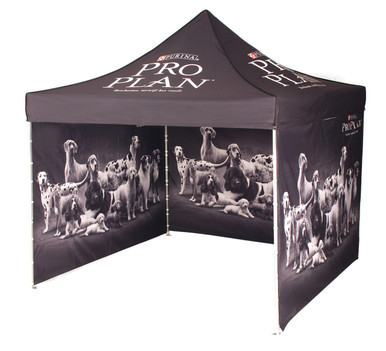
Buying a custom canopy is a significant marketing investment. Unfortunately, many brands fall into the trap of purchasing lightweight, low-grade tents that collapse during their first encounter with a summer gust. Knowing what specifications matter will save you money and embarrassment in the field.
There are three main components to evaluate: the frame hardware, the canopy fabric, and the printing process. Skimping on any of these will drastically reduce the lifespan of your display.
Hexagonal Aluminum vs. Square Steel
The frame is the skeleton of your operation. Cheap tents use square steel legs, which are heavy to carry and prone to snapping or bending at the joints. Professional-grade canopies rely on hexagonal aluminum legs.
Aluminum is lighter and naturally resists rust, while the hexagonal shape provides vastly superior structural rigidity compared to a square profile. Always look for thick footpads and heavy-duty connector joints—these are the stress points that fail first on inferior frames.
Fabric and Print Quality
Canopy fabric is measured in denier, a unit of textile thickness. You want a canopy made from 600D polyester at minimum. This ensures the fabric is tear-resistant, waterproof, and capable of holding taught across the frame without sagging.
For the print itself, dye-sublimation is the gold standard. Instead of printing ink on top of the fabric—which can peel or scratch—dye-sublimation uses heat to infuse the dye directly into the fibers. This results in vibrant, edge-to-edge colors that withstand sun exposure and folding.